During my tours in Aguada, visitors often ask what foods local residents still buy and enjoy every day. One answer surprises many travelers: the Galleta de Casco, a large artisan cracker that has been part of Puerto Rican life for generations.
Contents
History and Ingredients
The origin of the Galleta de Casco (Puerto Rican cracker) is rooted in Puerto Rico's artisan baking traditions. It comes from the island's mountain towns, and its recipe varies from one municipality to another. This rustic cracker is versatile because it pairs well with a wide variety of foods. For generations, it has been part of the daily diet of many Puerto Rican families.
Local bakeries developed the Galleta de Casco as a crunchy, affordable, and long-lasting alternative to traditional Puerto Rican bread known as pan criollo. Another contributing factor was the limited availability of pork lard used in bread production. Both pan criollo and the Galleta de Casco (Puerto Rican cracker) are baked at similar temperatures and share key ingredients such as enriched wheat flour, water, salt, and yeast. The differences lie in the baking time, the type of lard used, additional ingredients, and the cracker's final shape and size.
Mass Production and Availability
The tradition of making Galleta de Casco (Puerto Rican crackers) by hand survives in only a small number of bakeries throughout Puerto Rico. Today, many versions are mass-produced using mechanized processes and modified ingredient lists.
The Holsum brand helped made available the product through supermarket distribution and plastic packaging. These crackers can also be purchased at Holsum retail stores (The Tiendita Holsum). Use Google Maps to locate the nearest location.
La Orocoveña Biscuit is another Puerto Rican company that has produced smaller-sized Galleta de Casco (Puerto Rican crackers) for more than 55 years and distributes them throughout the island's supermarkets.
How is Galleta de Casco made?
Availability of the Artisan Version
The Galleta de Casco (Puerto Rican cracker) is so beloved that many Puerto Ricans living in the United States return home with several bags packed in their luggage. Family members and friends often mail them to loved ones who miss not only their distinctive flavor, but also the memories of breakfasts, snacks, and family gatherings from childhood. In this way, the tradition continues to connect Puerto Ricans across generations and miles.
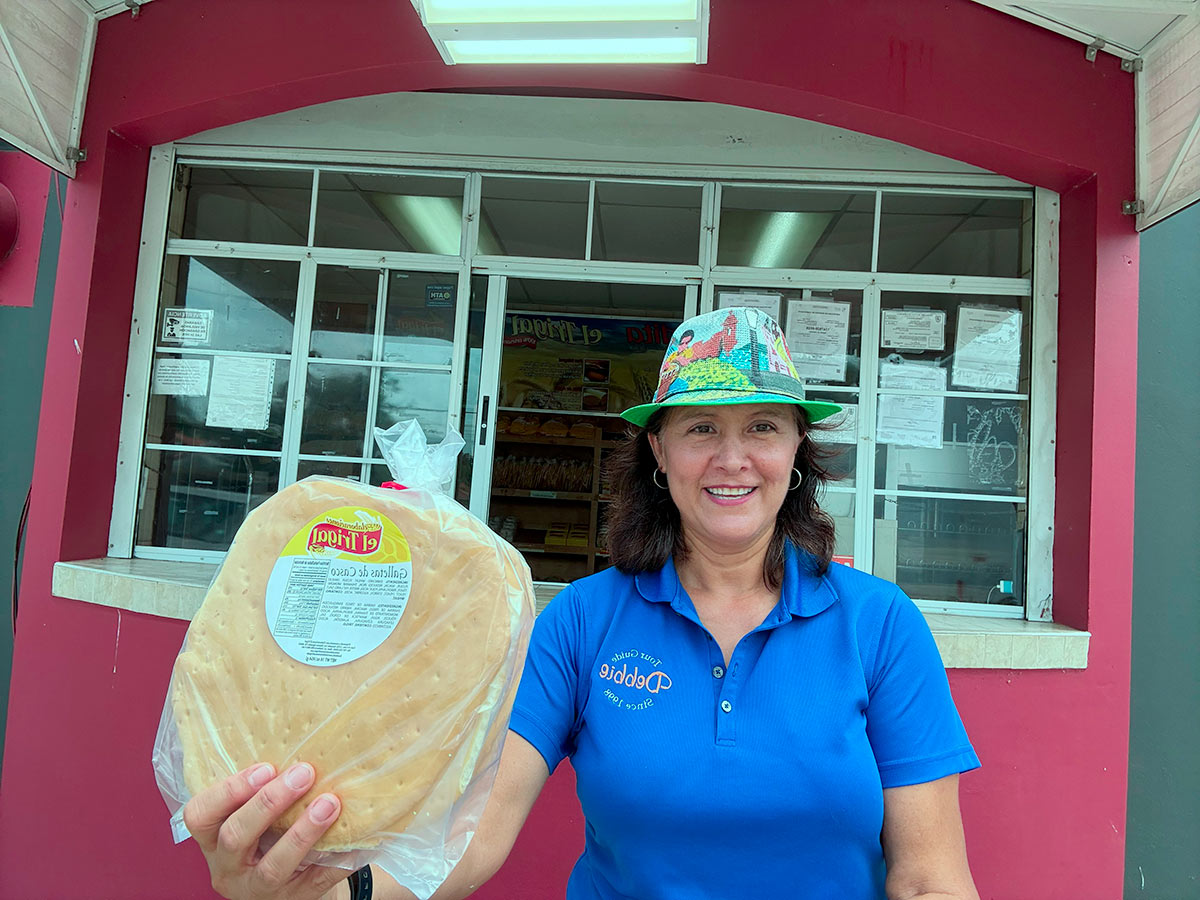
During my visit to the bakery shop at Elaboraciones El Trigal in Aguada, I was impressed to see customers arriving from municipalities across Puerto Rico to purchase at least one bag containing five crackers measuring approximately nine inches in diameter.
I met customers from Rincón, Añasco, Mayagüez, Cabo Rojo, Aguadilla, Isabela, Quebradillas, Moca, San Sebastián, and San Juan. One customer from Isabela told me she has been traveling to Aguada for more than twenty years to buy her favorite Galleta de Casco. The bakery is open daily from 7:00 a.m. to 9:00 p.m.
Artisan Production
The employee responsible for producing approximately seventy pounds of the region's most popular Galleta de Casco each day explained that the primary ingredients are wheat flour and pork lard.
The process remains largely handmade. No molds are used to shape the crackers. Each four-ounce portion of dough is worked by hand until it reaches its final size. Three machines assist in production: a mixer, a dough divider, and a dough sheeter that reduces thickness.
However, the baker's hands complete the final stretching process, expanding each piece to approximately nine inches in diameter. Its shape is distinctive—neither perfectly round nor square—but irregular with slightly wavy edges. Much of its characteristic flavor comes from the pork lard used in the recipe.
Local Tip
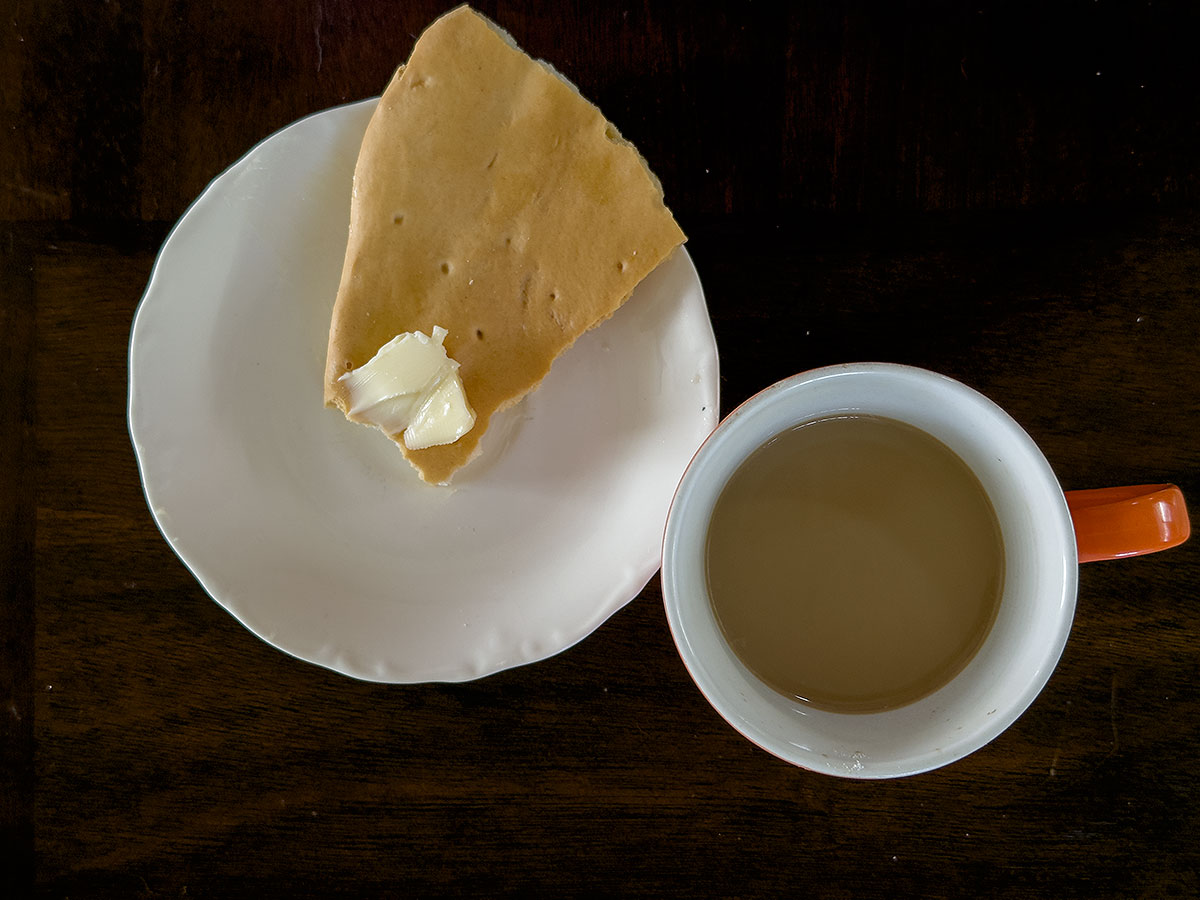
Fresh Galleta de Casco is at its crispiest on the day it is baked, but many Puerto Ricans enjoy storing a few bags at home because the crackers keep well one week. They pair especially well with café con leche, avocado, Edam cheese, guava paste, or a simple spread of butter.
What are the popular names for Galleta de Casco?
The name Galleta de Casco is believed to come from its firm, crunchy texture. Historically, it was also known as Galleta de Manteca.
Employees at Elaboraciones El Trigal shared some of the nicknames customers use because of its size and appearance:
- Elephant Ear
- Frisbee
- Hubcap
- The Sun
What foods pair best with Galleta de Casco?
During my visit, I asked more than ten customers how they enjoy Galleta de Casco (Puerto Rican crackers). The most frequently mentioned pairings were avocado, butter, and coffee. Their answers reflected the versatility of this traditional food.
I was surprised by the variety of answers. Some customers preferred traditional pairings such as butter and coffee, while others enjoyed modern options including banana, peanut butter, and Cheese Whiz.
Favorite ways to enjoy Galleta de Casco included:
- Plain
- Avocado
- Butter
- Diced ham
- Mild Edam cheese
- Puerto Rican white cheese
- Guava paste
- Sandwich spread
- Cheese Whiz
- Coffee
- Hot chocolate
- Banana
- Peanut butter
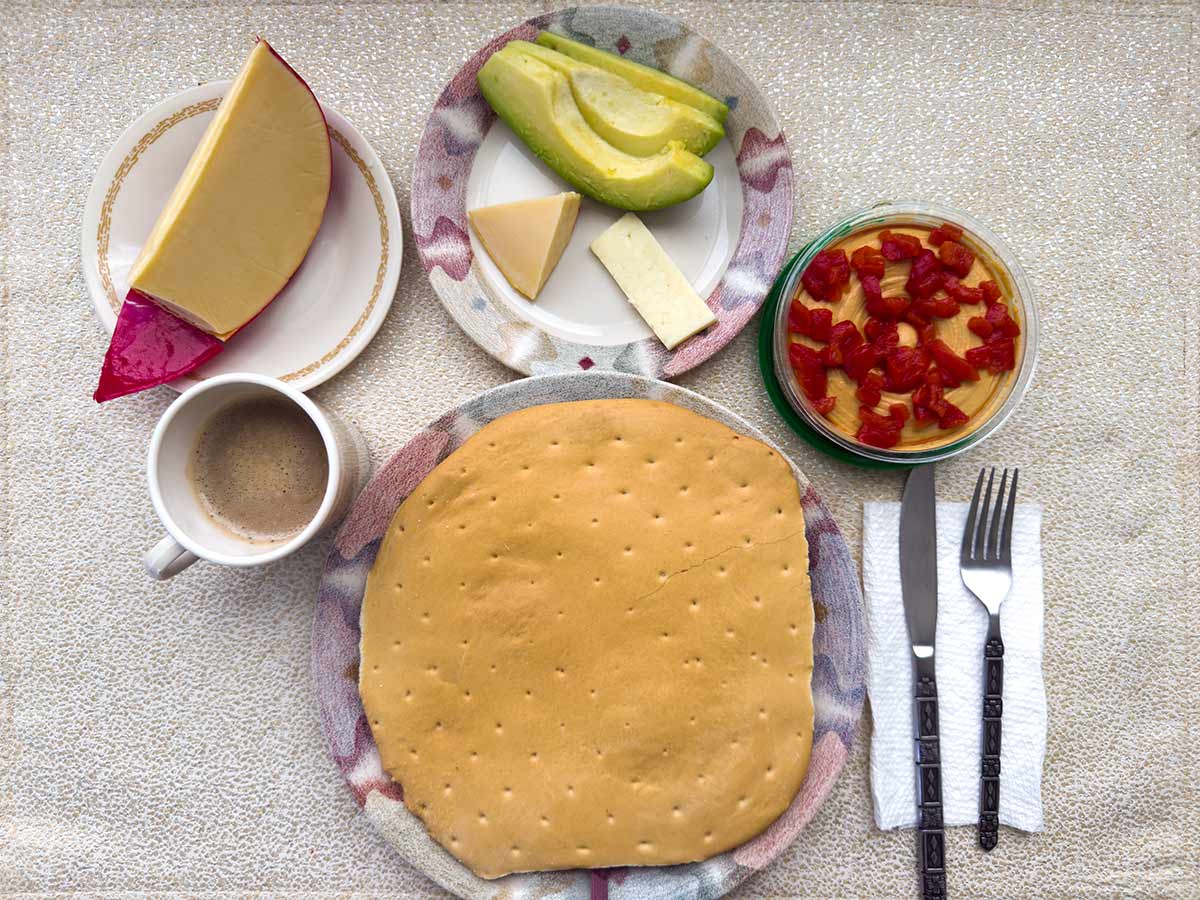
My Experience with Galleta de Casco
When I was growing up, I often ate Galleta de Casco for breakfast with a fried egg and a glass of juice. It was also a common afternoon snack served with potato cheese or Edam cheese.
The Galleta de Casco (Puerto Rican cracker) is crunchy but not toasted. Its aroma reminds me of freshly cooled pan criollo. It has a simple, pleasant flavor similar to dried bread and gently melts in my mouth. One of my favorite ways to enjoy it is by dipping it into café con leche.
Today, I still enjoy it with some of my favorite toppings, including avocado, mild Edam cheese, Puerto Rican white cheese, and sweet peppers, either alone or mixed with hummus.
Things to do in Aguada
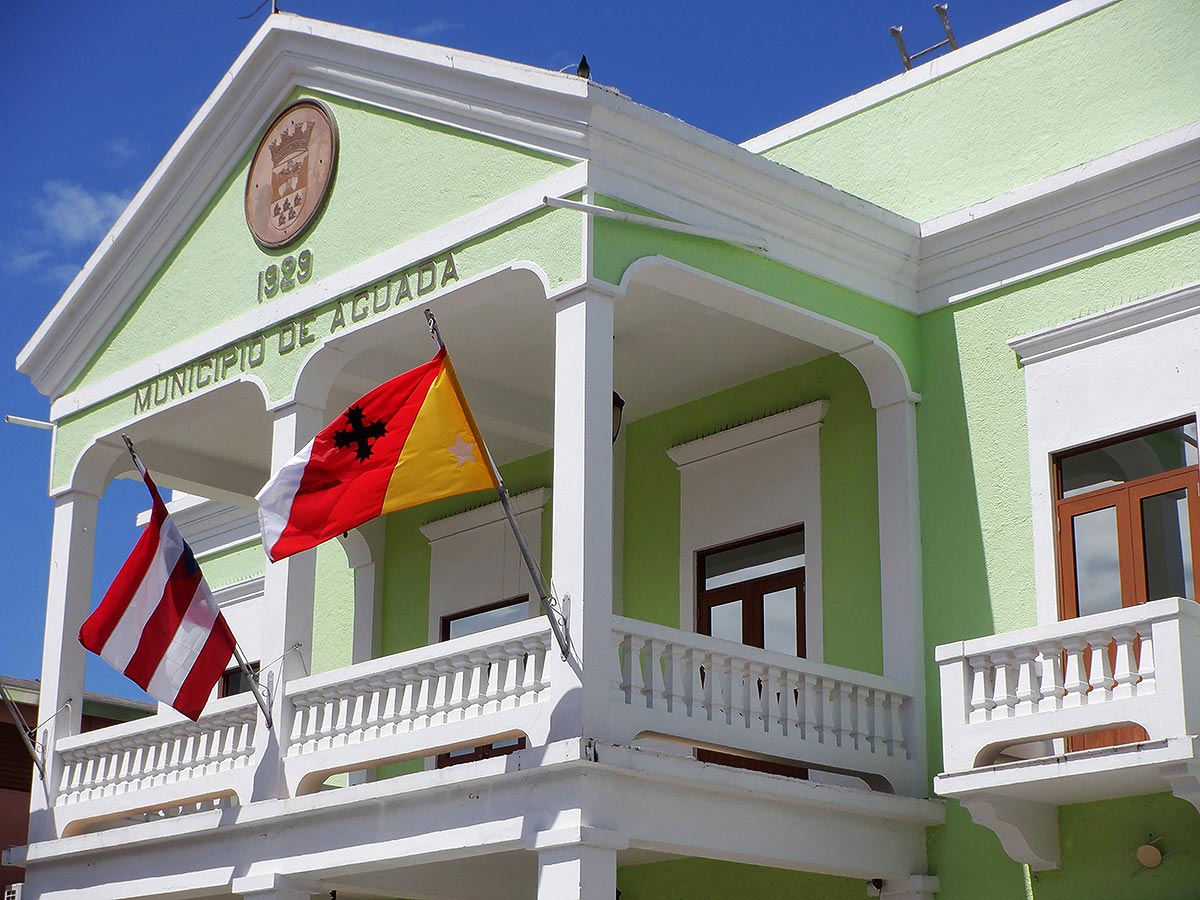
After this experience, I have another reason to recommend visiting northwestern Puerto Rico and reading my article Puerto Rico's Northwest: Where History Began..
In Aguada, you will find Elaboraciones El Trigal, one of the few bakeries where Galleta de Casco (Puerto Rican crackers) are still handmade using a traditional method that has delighted generations of Puerto Ricans.
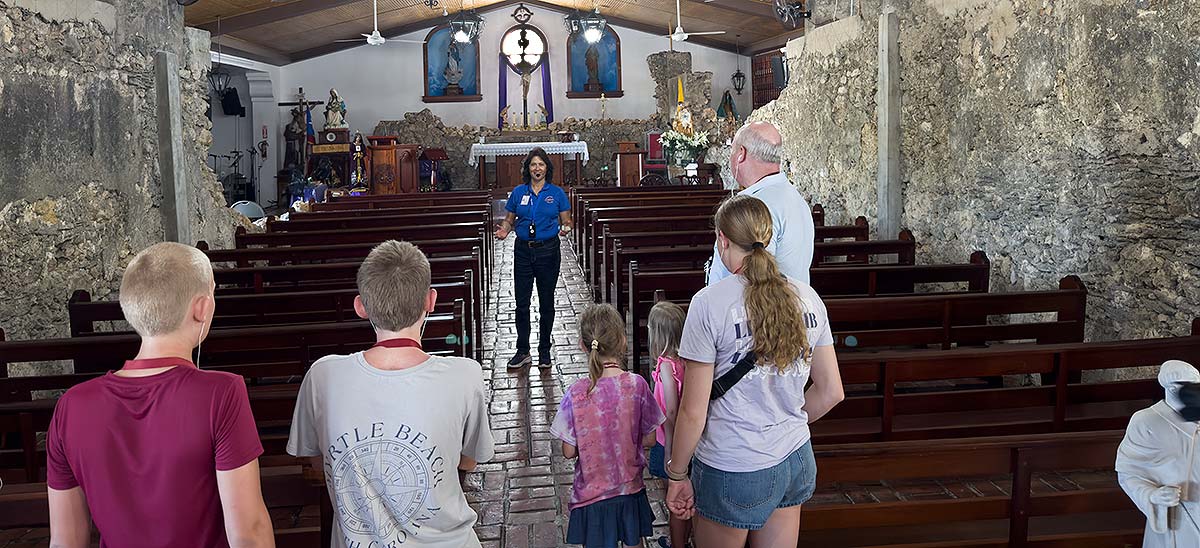
Participants on my European Legacy in Aguada tour will stop at the bakery store, where they can purchase Galleta de Casco and other baked goods made in Aguada to enjoy during their trip or take home as a delicious souvenir from Puerto Rico's northwest coast.